Safety information & side effects
Duvyzat®
(givinostat)
This medicine is subject to additional monitoring and information about reporting side effects can be found at the bottom of this page.
All photographic images on this page feature real patients. They are shown for illustrative purposes only, and individual experiences may vary.
Safety first
What should be considered before treatment?
Before starting Duvyzat®, your healthcare team will carefully assess whether the treatment is suitable and if there is anything special to watch out for.
After started Duvyzat®, your healthcare team will closely monitor your health through regular blood tests and may also monitor your heart beat with regular ECGs. This way, any possible side effects can be detected early, and the right measures can be taken.
These blood values are checked regularly:
Blood cell count
To check the levels of different types of cells in your blood
Triglycerides
To check the levels of a type of fat in your blood
These tests are more frequent at the beginning of treatment. Over time, they will become less frequent. Some tests may require fasting. Check with your healthcare provider before your appointments to confirm if fasting is required.
If you notice any side effects, please contact your healthcare team right away. Do not wait until your next check-up appointment!
Please see the monitoring checklist below to help guide you along your treatment journey.
Stay on track with monitoring
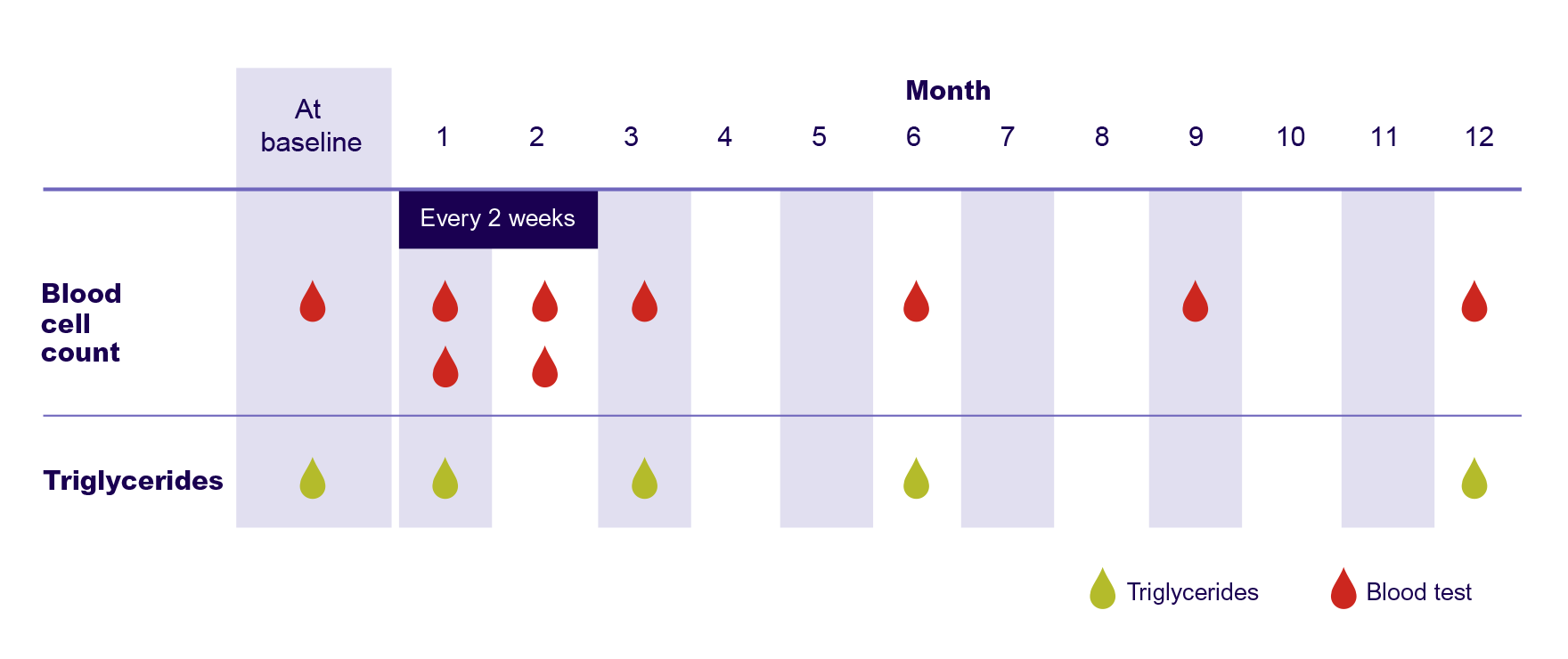
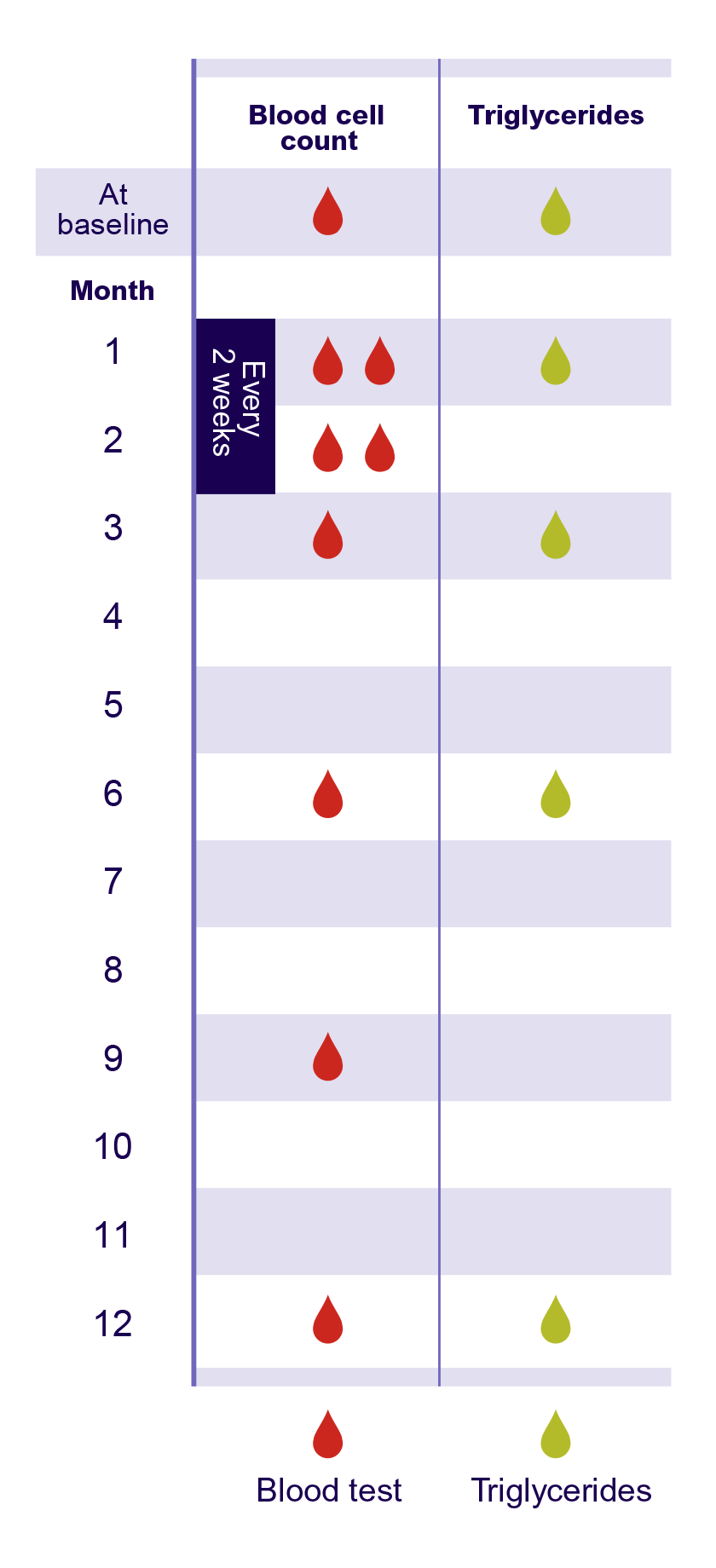
Blood monitoring: This overview helps you keep track of all blood tests during the first year of treatment.
In the first 2 months of treatment, blood tests usually take place every 2 weeks. In some cases, your healthcare team may recommend more frequent checks – this is no cause for concern.
ECG monitoring: Your healthcare team may recommend additional ECG monitoring due to underlying cardiac disease or other medications you are taking.
Please see full Duvyzat® Patient Information Leaflet (PIL) and talk to your healthcare team if you have any questions.

Track your progress
Use the ‘Duvyzat® dosing & monitoring leaflet’ to track your appointments and test results
Side effects
Unfortunately, there’s no way to predict whether side effects will occur. Ideally, both you and family members should watch out for potential signs, and inform your healthcare team if any issues arise.
Serious side effects can also occur during treatment with Duvyzat®. On this basis, your healthcare team carries out regular blood tests and takes appropriate action if any abnormalities are detected.
Known side effects
Reduced platelet count (thrombocytopenia)
If you have unusual bleeding or small red to purple spots on the skin, inform the healthcare team immediately.
Increased blood fat levels (elevated triglycerides)
These changes in the blood initially show no symptoms but are detected early thanks to regular monitoring.
Diarrhoea
If you experience diarrhoea, keep track of how often it occurs and how severe it is, and contact your healthcare team. It is important to stay well hydrated.
Changes in heart rhythm (QTc prolongation)
Some people may experience changes in the heart’s rhythm. This usually causes no symptoms, but your healthcare team may monitor this with heart tests called ECGs.
Reporting side effects
Potential side effects of Duvyzat®
Download the list of known Duvyzat® side effects. Please familiarise yourself with them and inform your healthcare team if any issues arise.
Reporting side effects
Your safety matters – here’s how to report concerns
Instructions for reporting side effects via MHRA Yellow Card are shown below.
You can also refer to the instructions in the patient information leaflet regarding how to report side effects.
Reporting of side effects:
If you get any side effects, talk to your doctor, pharmacist or nurse. This includes any possible side effects not listed in the package leaflet. You can also report side effects directly via the Yellow Card Scheme at: https://yellowcard.mhra.gov.uk
By reporting side effects, you can help provide more information on the safety of this medicine. This medicine is subject to additional monitoring. This will allow quick identification of new safety information. You can help by reporting any side effects you may get. See https://yellowcard.mhra.gov.uk for how to report side effects.